PowerSync home page
Dashboard
Get Started
Get Started
Search...
Navigation
Architecture
Architecture Overview
Search...
⌘K
GitHub
Community Discord
PowerSync Website
Get Started
Introduction
Setup Guide
Understand PowerSync
PowerSync Philosophy
Architecture
Architecture Overview
PowerSync Service
Client Architecture
PowerSync Protocol
Consistency
Examples
Self-Hosting
MongoDB Atlas Device Sync Migration Guide
Configuration Details
Source Database
PowerSync Service Setup
App Backend
Authentication
Sync Rules & Streams
Overview
Sync Rules (GA)
Sync Streams (Early Alpha)
Type Mapping
Advanced
Client SDKs
Overview
Dart/Flutter
JavaScript
Kotlin
Swift
.NET
ORM Support
Reading Data
Writing Data
Usage Examples
Advanced
Handling Writes
Upload Queue/Uploads
Conflicts
Advanced
Maintenance & Ops
Debugging
Monitoring and Alerting
Production Readiness Best Practices
Compacting Buckets
Handling Schema Changes
Self-Hosting
Integrations
Overview
Supabase
Neon
Serverpod
Railway
Coolify
Tools
Overview
CLI (Beta)
PowerSync Dashboard
Sync Diagnostics Client
Local Development
AI Tools
Resources
Usage & Billing
Performance and Limits
Supported Platforms
Feature Status
FAQ
Local-First Software
Security
HIPAA Compliance
Contact Us
On this page
Protocol
Architecture
Architecture Overview
Copy page
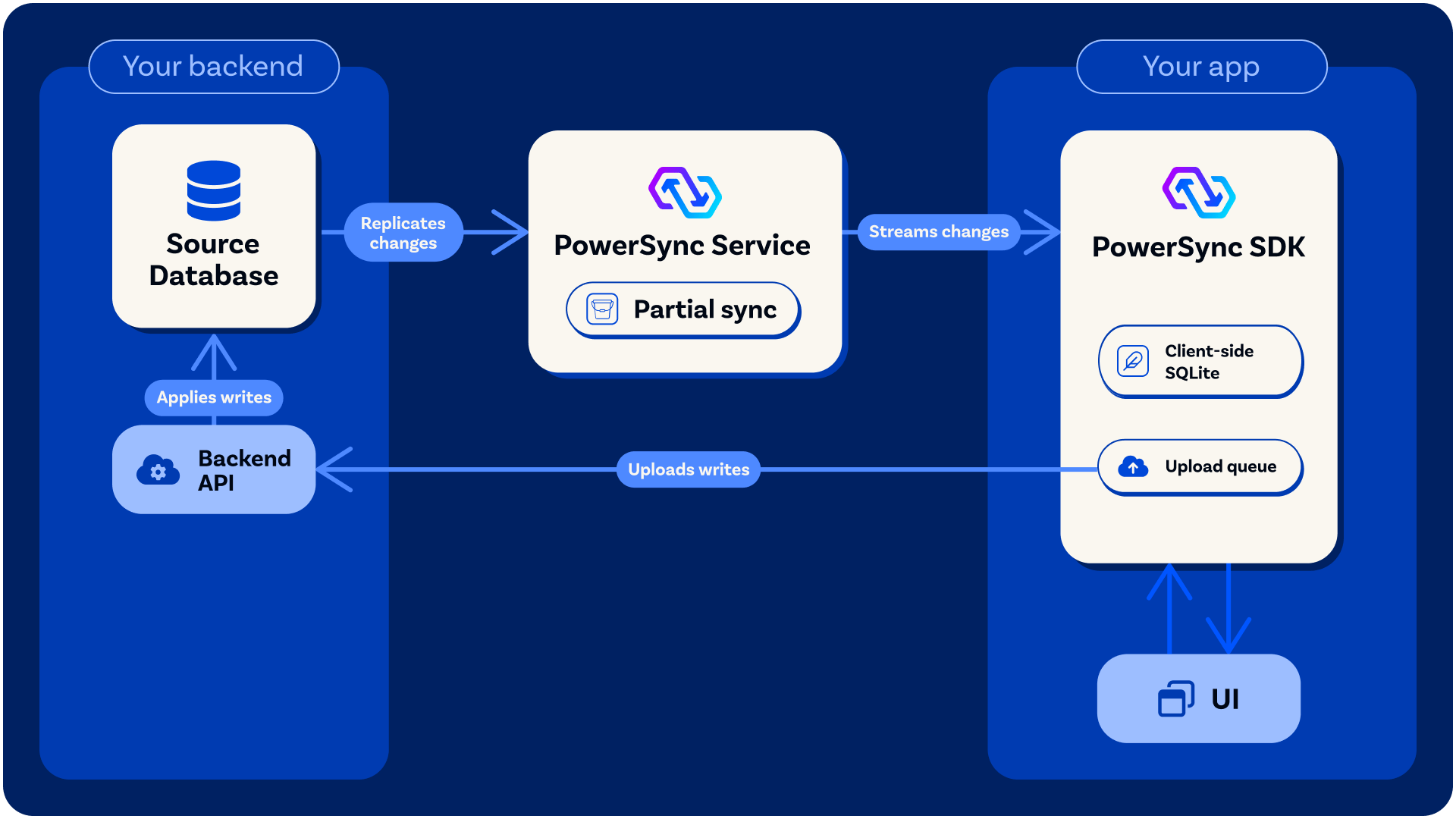
The core components of PowerSync are the service and client SDKs.
Copy page
The
PowerSync Service
and client SDK operate in unison to keep client-side SQLite databases in sync with a backend source database. Learn about their architecture:
PowerSync Service
Client Architecture
Protocol
Learn about the sync protocol used between PowerSync clients and the
PowerSync Service
:
PowerSync Protocol
Consistency
Suggest edits
Raise issue
PowerSync Philosophy
Previous
PowerSync Service
Next
⌘I